
Advanced Insulation Technologies in High - Performance Travel Mugs
In today’s fast - paced world, a high - performance travel mug is more than just a convenience—it’s a necessity for keeping your favorite beverages at the perfect temperature, whether you’re commuting, hiking, or working. Behind the sleek designs of top - tier travel mugs lie cutting - edge insulation technologies that redefine how we retain heat or cold. Let’s dive into the advanced methods that make these drinkware essentials so effective, drawing insights from the innovation - driven approach of Hongtai Drinkware and the broader industry trends.
1. Vacuum Insulation: The Core of Thermal Retention
At the heart of most high - performance travel mugs is vacuum insulation. This technology relies on a double - walled structure where air is removed from the space between the inner and outer layers, creating a near - vacuum environment. Since heat transfer via conduction and convection requires a medium (like air or a solid), the vacuum layer drastically reduces these processes:
- Heat Conduction: Without air molecules, there’s no medium for heat to travel through the gap between the walls.
- Heat Convection: Convection currents (movement of heated air) can’t form in a vacuum, eliminating this heat transfer method.
For example, stainless steel travel mugs with a double - walled vacuum design (a signature of brands like those at Hongtai Drinkware) can keep drinks hot for 12+ hours or cold for 24+ hours by blocking heat transfer paths.
2. Advanced Material Innovations for Insulation
Beyond vacuum technology, the materials used in travel mugs play a critical role in temperature retention:
a. Stainless Steel (Food - Grade)
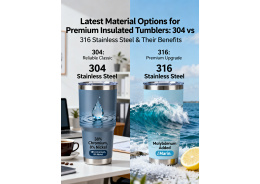
High - grade stainless steel (e.g., 304, 316) is a staple in premium travel mugs. Its low thermal conductivity (compared to other metals) and excellent corrosion resistance make it ideal for inner and outer walls. The smooth, non - reactive surface also ensures no flavor transfer, preserving the taste of your drink.
b. Ceramic Coatings
Inner liners with ceramic coatings offer dual benefits: a ultra - smooth surface that minimizes heat radiation (as ceramics have low emissivity) and resistance to stains/odors. This coating acts as an additional barrier against heat loss, especially for hot beverages, by reducing how much heat is radiated from the liquid to the mug’s exterior.
c. Aerogel Insulation
Aerogels, known as “frozen smoke,” are revolutionary insulation materials with extremely low thermal conductivity. Some high - end travel mugs integrate aerogel into their wall structures, providing superior insulation while keeping the mug lightweight. This material is so effective that it’s used in space exploration and industrial insulation, now adapted for consumer drinkware.
3. Structural Design Enhancements
The design of a travel mug’s components also contributes to its insulation prowess:
a. Airtight Sealing Systems
Silicone or rubber gaskets in the lid create an airtight seal, preventing heat - carrying air from entering or escaping. This eliminates convective heat loss through the lid, a common weak point in less - advanced mugs. Brands like those at Hongtai Drinkware often use food - grade silicone seals for durability and reliability.
b. Innovative Lid Designs
Lids are engineered to minimize heat transfer:
- Twist - on Lids: Securely fasten to the mug, reducing gaps where heat could escape.
- Push - Button or Flip - Top Lids: Allow easy sipping while maintaining a tight seal when closed. Some lids even feature pressure - relief valves to make drinking easier (by releasing built - up air) without compromising insulation.
- Insulated Lid Layers: Lids with their own insulating layers (like a secondary plastic or foam layer) to block heat transfer through the lid itself.
c. Ergonomic and Insulation - Friendly Shapes
While aesthetics and grip matter, the shape of the mug (e.g., a narrow neck to reduce surface area for heat loss, or a wide base for stability) also subtly impacts insulation. A well - designed profile balances usability with thermal efficiency.
4. Smart Insulation: The Future of Travel Mugs
Emerging technologies are taking insulation to the next level:
- Temperature - Controlled Mugs: Some travel mugs now include built - in heating or cooling elements, paired with temperature sensors, to maintain a precise temperature (e.g., 55°C for coffee, 10°C for iced tea) for hours. These smart mugs can be controlled via apps or manual buttons, adapting to your drink’s ideal temperature.
- Phase - Change Materials (PCMs): Integrated into the mug’s structure, PCMs absorb or release heat to regulate temperature. For example, a PCM layer can keep a drink hot by releasing stored heat as the drink cools, or keep it cold by absorbing heat from the drink as it warms.
Conclusion
High - performance travel mugs are a symphony of vacuum technology, advanced materials, thoughtful design, and even smart tech. From double - walled vacuum chambers to aerogel insulation and airtight seals, these innovations work in tandem to lock in heat or cold for extended periods. Whether you’re a coffee enthusiast needing a piping - hot brew at 3 pm or a hydration fanatic wanting icy water on a hike, understanding these insulation technologies helps you choose a mug that truly delivers. Brands like Hongtai Drinkware exemplify how combining these technologies—vacuum insulation, premium materials, and precision engineering—creates travel mugs that redefine on - the - go beverage enjoyment.



 English
 German
 French
 Russian
 Spanish
 Japanese
 Korean
 Portuguese
 Ukrainian
 Arabic
 Italian

